
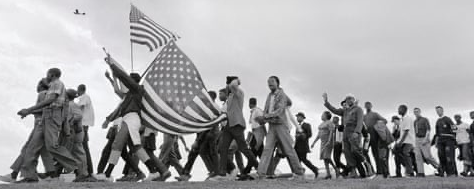
An exhibit of historic civil rights photographs by the late photographer Matt Herron will open in Marion next week, part of a community-led effort to return his images to the places and people they depict.
“Matt Herron: A Living Archive” will be on display Thursday, Dec. 4, 2025, beginning at 10:00 a.m. at Phillips Memorial Auditorium in Marion. The exhibit will feature iconic photographs and a book collection drawn from Herron’s work documenting the Civil Rights Movement in Alabama and across the South, including images of local footsoldiers from the Selma to Montgomery march and the voting rights campaign in and around Marion.
Herron, a Philadelphia-born photographer, moved with his wife, Jeannine, and their young family to Jackson, Miss., in 1963 and began shooting for national publications such as Life, Look, and Newsweek. Over the next several years he captured mass meetings, marches, integration efforts, and the resistance those campaigns faced, with some of his best-known work coming from the Black Belt of Alabama in early 1965.
After Herron’s death in 2020, Jeannine Herron donated his full archive, spanning from the late 1950s into the 2000s, to Stanford University, while retaining hundreds of exhibition prints from his civil rights work. Working with partners through a project called “Matt Herron: A Living Archive,” she has sought to place those prints back into the communities where they were taken so they can help educate and inspire new generations.
Prints have already been placed in institutions around the country, and organizers are now focusing on returning Herron’s Marion images to local families, churches and public spaces.
The Marion initiative brings together community leaders and descendants of local activists to develop a long-term plan for exhibiting and interpreting Herron’s photographs. Many of the images featuring Marion residents had never been seen by the people who appear in them until this fall, when organizers began sharing the photographs locally.
As part of the project, organizers also envision a permanent gallery and reading space at Auburn University’s Rural Studio reconstructed Little School House site on the grounds of First Congregational Church in Marion. The space is expected to house the Herron Civil Rights Library and provide room for future talks, educational programs and oral histories tied to the photographs.